Friday, 11 March 2016

Legal Acts

Whats the difference? 

Laws- Are written approved and enforced by a particular  government. If you break a law you could face police investigation, court appearance and fine.

Ethics- Rules on conducts, responsibility (not the law). If you break an ethical code you may be forced to act with ethical disapproval from your peers or professional body.

Privacy Law (human rights law)- Privacy law is a regulation that protects a persons right to be left alone. People are allowed to lead their lives without public scrutiny. ' The right to privacy'. 'The right to being left alone'- 'harassment and data protection'. Example-News of the world phone hacking scandal.
 Another example would be when the paparazzi where harassing princess Diana

Copyright and Intellectual property law- Intellectual property is something that is unique to you if it is physically created.i.e. an idea is not your intellectual property but the words you write are. Copyright is a type of intellectual law that protects your work. by knowing your rights and have the right type of protection you can stop people from stealing  or copying: 

  • The names of your products or brands
  • your inventions 
  • the design or look of your products 
  • things you write or produce
Examples- hangover 2 'tattoo'/ avatar and William Roger Dean.

Libel Law-To publish in print something which is not true or may harm that persons reputation and may bring hate or scorn towards them. It must be a statement which claims to be fact and is not clearly identified as an opinion.


safeguarding- An example of this would be when we wear our lanyards to college so then we know who is meant to be going to college who is not.


Official secrets acts- The official secrets act is a term used in hong king, india,


—Applies to all government employees including the armed forces and civil services

—Covers disclosure of information

—Legally binds them to maintain secrecy

—Failure to comply can have serious consequences and they vary depending on the nature of the secrets disclosed


Examples:


Former Labour spin doctor Damian McBride


Examples:


Former Labour spin doctor Damian McBride


Useful links for your assignment:


Wednesday, 24 February 2016

Understanding structure and ownership in the creative media sector


Understanding structure and ownership in the creative media sector.


Creative media consists of the following sectors: publishing, radio, TV, advertising and marketing, animation, film, games, interactive media and photo imaging. In this assignment I will be writing abut the structure and ownership of the sectors above.


Private Ownership-
The fact of being owned by a private individual or organisation, rather than  by the state or a public body.

Private Services-
The part of the economy that is not state controlled, and is run by individuals and companies for profit. The private sector encompasses that all for- profit businesses that are not owned for operated by the government.

Cross Media -
Cross -media marketing is a form of cross-promotion in which promotional companies
commit to surpassing traditional advertisement techniques and decide to include extra appeals to the products they offer. The material can be communicated by any mass media such as emails, letters, web pages or other recruiting sources.


https://prezi.com/zhetcguu5ujl/undersanding-the-structure-and-ownership-of-the-media-sector/

TV:
TV is one of the biggest Media industry and it has a lot of competition that employs over 50,000 people and its probably that popular because TV can broadcast around the world. With TV being so popular people will want to be employed to work in the TV media because they will get a lot of money (in certain parts you will).Also TV has many different programmes and films which means that they will be a TV programme/film for everyone.  Specifically, in the UK, TV is dominated by a few main/popular broadcasters, however they're also many smaller broadcasters but they will not be as popular in the TV media industry because people haven't discovered there TV channels or people might not like/ agree with there content. The main broadcasters are:

- The BBC- Public company, funded by the TV license.

- ITV- Private Company, 60% owned by ITV PLC but its also partly owned STV Group PLC (Scotland) and UTV ( Northern Ireland)

- Channel 4- Private Company, funded by advertising.

- Channel 5- Private Company - Owned by Northern & Shell (which is owned by Richard Desmond).

These TV channels could be so popular because they are broadcasted to more people unlike the smaller TV channels/programmes which might be for example only broadcasting in Northern Ireland. Also they might not have as much advertisement as some TV channels do which is why they are not getting a bigger audience watching.

The BBC is one of the most popular TV, media sectors and with 50,000 people employed in the TV industry a lot of them will be working for the BBC. Here is the structure so you will understand more:

Development: This is when the TV company, producers, writers, etc will try and come up with a plot/ idea for the TV show idea.

Pre Production: When you make storyboards, edit more of the script before it locks, decide what characters you need, etc. This is also when you decide how much money need for your budget.

Production: This is when you make your TV show and record the actors/ actresses. For example this is when you would shoot your first episodes.

Post Production: This is when you edit the episodes and discuss if you should change anything in the editing and this is where you add more special effects, music, etc.

Distribution: This when you will give the TV show the channel you want for example with Misfits they gave there show to Channel 4 and then you give them the date and time you would like it to be aired.

Exhibition: Finally this is when the show is aired on the channel that you want it to hopefully be on.


Radio:
Radio is one of the oldest forms of mass media. Radio also transmits around the world but it only transmits sound-based media to the likes of a car radios, TV or you can even purchase a radio. Unlike a TV you can take a radio anywhere with you and it could get connection, for example camping, but it depends if you can get connection where you are. However radio is not as popular as it used to be when it first came out in 1906. It was probably really popular back then because you could listen to everything you needed to on the radio (news, music, ect) but now we have TV, phones, ect which means that radio is not as updated as the things we have today so its dying out.  Plus you can listen to the radio on those things now so they're are not as needed as much. But some people still listen to the radio in the car because you obviously you cant go on your phone or watch TV ect when you drive. They're three main sections of radio:

-Publicly funded radio- Taxpayer funded (for example BBC,Radio 1)

- Commercial Radio- Advert funded (foe example Metro Radio)

- Community and voluntary radio- Hospital radio stations,etc (for example Hospital radio Hilingdon [1970-2012]

Distribution: This is when you would think of what type of radio show you would like and what radio station you would like it on.

Pre Production: In this part you need to make your storyboards, scripts, etc and this is also a chance for everyone to share there ideas which can improve the radio show.

Production: This is when you will do rehearsals for the radio and this is when they might previously record the show before they air it. But if they are 100% sure with there idea they will just do there idea live but for example they will have to give there idea to the head of there office before they let it air just in case your show might offend someone or it might not be a good idea for the radio station.

Post Production: This is when you take pre-recorded radio 'skits' and you can edit parts out or edit sound effects in. But you an also improve the sound of the recording.

Distribution: This when you give it to the head of the radio station and if they like it you let them know the time what station you would like it to be aired.

Exhibition: This when it will be aired for everyone to listen to.

Ownership: Some radio stations like the BBC one are publicly owned which means that it is funded by the public and when more people listen to the radio station it earns more money to improve the radio stations shows and for there licence fees.


Film:
Film is one of the most successful sectors in the media industry. The film industry has over 27,800 employees. 62%  are employed in exhibition, 34% are in production and the remaining 4% are in distribution. However they're 6 specific components to the film industry, development, pre-production, production, post production, distribution, exhibition.

Development: In development they have a distributor and the distributor along with some other companies are involved throughout the movie. For example Disney work with Marvel and whilst this was happening marvel where making a film called Captain America Civil War. Also in development you plan the film and the idea for the film.

Pre-Production: The people who help in the pre production are the producer, director, insurance advisors, line producers, artistic director, casting director, director of photography, investors, graphic artists, location manager, lighting designers and the gaffers. Pre-production is when you make the storyboards, write and edit the scripts, ect.

Production: Is when the director,ect shoot the film.

Post production: The people who help with the post production are the director, editors, graphic designers, sound designer, colour corrector and data wrangler. In post production the colour correct your film footage and they edit it and then the end result  is the finished film.

Distribution: This is when you take the film you have made and you dispatch it to the cinemas you choose. It could be around the world or just in one place/ country. It depends how big your film is going to be.

Exhibition: This when you release your films in the cinema and then later on in the year you release it on DVD.

Ownership: They're are many conglomerate ownerships in film but a big one is Disney. They own many things but it is mostly known for owning Marvel.

The film industry is dominated by many major companies for example Disney (as I mentioned before), paramount, 21st century fox, etc. However they're some smaller companies such as pinewood studios, a small British company, etc.  Smaller studios don't usually end up making hugely popular films but if the do its really rare.


Animation:
Animation is the most vital sectors in the media industry because TV, film, video, games, adverts, interactive media and marketing. TV, adverts and film all use animation as a technique for producing shows, adverts and films. But they also use animation for special effect and video games are based on imaginary world in which a person will create a character and it will make it feel like they are in the game.
The main animation companies are:
DreamWorks (Owned by Paramount)
Pixar (Owned by Disney)
However they're some smaller animation companies to and they have been successful. One of them is called Aardman Animation of the UK.

Development: This is the part when the producers and writers come up with a new film idea.

Pre Production: This is when they make the mood boards/storyboards and other planning things. But this is when they also make digital characters or models. This will also be when they might want to change some ideas before they lock scripts.

Production: When they have made the characters, sets, etc. This is when they will create the individual animated frames for the animation of your choice.

Post Production: This is when you check that the animation has gone correctly and change any mistakes. This is also when you edit and add any special effects, etc.  

Distribution: Is when you give your animation to the person/channel who is going to be showing it.

Exhibition: This is where the animation will be shown on TV or in the cinema. For example the animation 'Shaun The Sheep' is a TV show on CBBC but it was also made into a film.

Ownership: You can get different kinds of animation but for example Disney brought out a film called Frozen and Disney is part of a conglomerate which means its owned by Disney.
Interactive Media:
 Interactive media is the sector that creates social media websites which is where people can go to create content if they would like to.
Some of these websites are called:

Twitter
Facebook
YouTube
Google
Tumblr

The interactive media sector is worth over several billion pound and it employs over 34,000 people. Most people use interactive media everyday and don't even realise they are. People use Twitter and Facebook to communicate with each other, YouTube is mostly used to listen to music and to watch YouTuber's and Tumblr is used mostly to share creative content like art, etc. But interactive media is mostly used on smartphones or tablets because it is a lot easier and quicker to get on it on there. Also you can then go on it wherever you go unlike about ten years ago, you would have had to stay at home and go on the computer.

Developement: What is the type of game that you would like to make what is the plot of the game?

Pre Production: This is when you discuss your ideas and then you put your ideas on storyboards, discuss different script ideas before the script is locked, etc.

Production: This is when the game is designed and created by the game designers.

Post Production: This is when the games is tested and when you get different people ( most likely teenagers or young adults) to test them out and they can give you there opinions on the game so you can make changes before you release it.

Distribution: This is when you give your games to shops so then they can release them.

Exhibition: This when the game is released to the public.

Ownership: Rockstar are a big company that create well known games like GTA and so is Bully but they are both privately owned.

Games/ Computer games:
 Computer games are becoming very popular throughout global media. Computer games are slowly but surely becoming bigger in the media sector as people like YouTubers can make money from playing video games and it is becoming popular with teenagers and young adults. The gaming sector of media is currently making a lot more money than the DVD sector.
The top five biggest gaming companies are:

Activision
Electronic Arts
Nintendo
Sony
Capcom


Publishing:
The publishing sector of media focuses distributing and producing and its usually text based.
This includes media such as:

Press (Newspapers and Magazines)
Online Journals
Books
Photos
Posters (Adverts-Marketing)
Mailing Lists

However they're some British publishing companies such as Co & Bear Productions, Hersperus House and Plexus Productions.

Development: This will be where you come up with the idea for your book for example what's the idea/plot?

Pre Production: This is when you write down different ideas, what's going to be in the script. This is also when  you develop your plot further.

Production: This is when they write the book.

Post Production: This is when the publisher will re-read the book to see if you need to make any changes or if they're are any mistakes.

Distribution: This when the book is finished and shipped off to different shops/ book stores.

Exhibition: This is when the book is released.

Ownership: The writers are usually individually owned which means they get all the profit and all rights will go to them. Unless they have a ghost writer which means they write it for them and then they put there names on the book and give the ghost writer credit. This means the ghost writer will need some profit and writing rights to.


Advertising and Marketing:
Advertising is a form of communication to try and persuade and advertise. Most of the time adverts are to promote products service but they can also be public service adverts which tell us helpful information about our health.

Advertisements come many forms:

Newspapers 
Magazines
Online Advertisements
Television commercials
Outdoor advertisements (billboards, posters, etc)

However they are different advertising departments for example account services, creative, production, media and other services.

 Development: This is when you think of different ideas of what product you would like to sell and different ideas and how you would like to promote it.

Pre Production: In this part you will write different things you need to do. For example you will talk about the budget and what products, etc you will need for the advertisement.

Production: This is when you make the advertisement or film it and also when the product is made.

Post Production: This is when you can change/improve the advertisement e.g photo shopping something or editing things out. Also its to make sure that everything was filmed smoothly and to cut bits out if you need to. Plus this is for when the product will be having its final tests.

Distribution: This is when the product is sent to shops and the advertisements are sent to different channels and the posters,billboards are getting ready to be put up.

Exhibition: This is when the adverts are put up everywhere and the products are released to the public.

Ownership: This can also be seen as a conglomerate because say for example marvel brought out a toy Disney would still be the owner because like I said before Disney own marvel.


Marketing in media involves a lot of communication so then you can have great value products for the customers and great service. This is done with extensive marketing campaigns.

They're are 4 P's to marketing:

Product: What is being sold?

Promotion: Why should people buy it?

Price: How much is it?

Place: where can you buy it?


Public owned-
e.g BBC
Advantages:
The BBC aim at certain age ranges and they see what TV shows would be best for them. This means that it attracts more people to there channels and that people will enjoy there shows. Also this means that people will control what is shown on TV/ radio.
Even though TV shows are aimed at certain ages they are a range of shows for every age.

Disadvantages:
We have to pay to license this.

Privately Owned:
Advantages:
The company can control what is going to happen with the channels. For example they choose what TV shows for which age range, etc.
They have more freeway on what they would like to put on there channels.

Disadvantages:
The people who watch that channel have less of an input so they cant choose what shows that would be good on the channel. 
Also they will make less money because not as many people will want to watch there channel because they have not got the shows on that they would like to watch.

Conglomerates/Subsidiary:
Advantages:
Help each other when they're are making new ideas. This is good because your idea might be good but it might need some extra bits added to it to make it better.
More of a better budget because you don't have to worry about how much money you spend.
Disadvantages:
No consumer input which means a lot of people might not watch the shows or whatever they make and this will lose viewers.


Monday, 25 January 2016

techniques and styles of stop motion animation (kevins assignment)

 
Techniques and Styles of Stop Motion Animation.
 
 
Persistence of  Vision- Persistence of vision is when you put a group of photos/images together and your mind will link them together giving the illusion the photos/images are moving. Here is an example:


Early Animation Devices-
 
Zoetrope:
 The zoetrope is one of several animation toys that where made in the 19th century. This is one of the first ways people experimented with moving pictures. The zoetrope appeared first in England in 1834. It was then seen in France in 1860 and then was then later seen in the United States in 1867. It was originally named 'The Deadatelum' when it was made in 1834 but then it got renamed 'The Zoetrope' by a French inventor called Pierre Desvignes.
 
Mutoscope:
A mutoscope is a primitive version of the TV and film projector. The mutoscope was created by Herman Casler in 1894. You would find mutoscopes mostly at Penny arcades and Piers. But the mutoscope started to become unpopular when the projector ad film theatres where created and built. However they did keep some of the audience when the mutoscope started to play exotic dancers on there reels. Mutoscope where often reffered as 'What the Butler saw' because people thought it felt like you where peeping through a key hole.
 
 
Phenakistoscope:
In 1832, Belgian physicist Joseph Plateu and his sons introduced the Phenakistoscope which is also known as a 'spindle viewer'. But someone had also invented it independently in the same year. The other person who invented this was called Simon Von Stampfer of Vienna, Austria and he called it a 'Stroboscope' This invention was inspired by Michael Faraday and Peter Mark Rodget.Faraday invented a device that he called 'Michale Faraday's Wheel' that consisted of two discs that spun in opposite directions from each other.  When he noticed how good and successful his invention he then later made it into a toy and called it a Phenakistoscope.
 
 
Kinetoscope:
A kinetoscope is a device which allows people to view motion pictures. The kinetoscope was one of the first such devices that was widely developed and distributed, but even though it was not that successful because of mainly the design,  it clearly inspired other inventors so it is actually considered a landmark in animation history. The design consisted of a closed cabinet that was closed in which the film was spooled. People operated it by opening the top of the cabinet and then peer the small hole, and as the film would role across a series of rollers a light in the back would illuminate it which would then give the illusion of moving pictures. The kinetoscope  was shown to the public in 1894 and it was created by Thomas Edison.


Thaumatrope:
A Thaumatrope is a Victorian toy that's constructed from a disk or card featuring a different picture on each side and it is attached two pieces of string. When you span the strings rapidly the card rotates on its axis and the two images appeared combined. John Aryton Paris invented this in 1825.


Cell based animation-
Cell based animation is a traditional form of animation that is used in cartoons or in animated films. Call based means that each frame is made/drawn by hand. Full length film featuring cell based animation would require a million or more drawings to complete.  Snow White was originally a cel based film. Disney made a film called 'Snow White and the Seven Dwarfs' in 1937. At first when Walt Disney seen the animations for Snow White he did not like her that much because she was to 'cartoonish' and much like Betty Boop. When Snow White was being made the Fleischer Brothers heard about it and made a film that people think is similar but it was not as popular and did not make as much money. Also no-one went to the theatres to see it. Snow White was seen as more cute unlike the Fleischer brother film. When people first seen the Snow White they where amazed because everything on the screen would move unlike before when they usually only seen one thing move. This kind of film was new to people in the 1930s.
 
 
Cut out animation-
Cut out animation is one of the oldest ad simplest ways of animation. It consists of flat (2-D) props, characters, etc and they would be made out of materials such as paper, card or fabric. Animators would take pieces of different fabrics and place them together to create characters, etc and they would move them slightly then take a picture and then do it again and again, etc.  and when you filmed it at played it back it would look like the things are moving. The earliest cut out animation anyone has found was made by Lottie Reiniger and it was called 'The Adventures of Prince Achmed'  and it was made in Germany in 1926


 Model based animation-
Model based animation is when you have 3D objects and move them in a sequence. The models are mostly known to be made from plasticine or clay and these are the most commonly used but they can be easy/ cheap materials to find/ use. Also it is easy to mould into different shapes and objects. Plus you can get them in different colours or mix them together to make a new colour. They are really good because they will look realistic (depending on how you mould them or what character/object you want.) and you can usually have them in any scenery if you make the set right. When you make a model animation you make your model, move it slightly, then take a photo and then just keep doing that. When you are finished taking all the photos you can play them back and you should have made model animation. But to make sure you have an interesting storyline because people might not want watch it. Most model based animations are made for children because plasticine resembles play-doh and children like that and when they watch the animations they get inspiration and want to make there own little models.  An example of children model animation would be Shaun The Sheep. However some model based animations have adult storylines for example Wallace and Gromit.


Aardman Animations is a place that makes model animation and it is based in Bristol. Peter Lord and Sproxton came up with the idea of model based animation when they where in school and that's when they started an animation partnership. Aardman Animations started in 1972 and then they moved to Bristol in 1976 which is where they produced there first professional production. This production is called Morph, and it was for the children's programme called 'Take Heart'.
 
 
Pixilation Animation-
Pixilation animation is a stop motion technique that uses live actors and you take a photo and then move slightly and then do the same again before the next frame is taken (take it frame-by-frame) and when you play it back it should make an animated. This is when the actor is kind of acting like a stop motion 'puppet'. Norman McLaren is one of the first people to create a pixilation animation but it was only short and its called 'Neighbours' and it was made in 1952. This was probably the first time people seen characters fly in a film. Here's the short film:
 
 
Time based animation-
Time based animation is also known as time lapse its when you record and average film/animation and then speed it up. You see this a lot because people don't want to be sat there for ages watching for example someone draw a picture you don't want to be sat there for ages watching them draw it. It saves you time. You can also see this in beauty videos when someone is doing makeup, etc. Here's an example:


Monday, 4 January 2016

Music Video- assignment

Music video assignment 1!
What is the purpose of Music videos?

  • A purpose of a music video is to pay your fans back for listening to your music.
  • Also a music video is a great time to be creative and try new things. This is great if you are just starting out on making music videos because you can try new things and you can see if they work or not. This will help in the future because you will be able to finish the music video a lot quicker and then you will most likely get more money for it.
    • You also do it to try and keep a reputation. For example if you make a video and it has something in it that might stand out or looks good then you will get a good reputation.
    • They also do it because they want to promote the film maker. So for example if you make a good video and a lot of people see it and like then you would get more people wanting help from you or even making them a music video.
    • The purpose of a lot of music videos is to make money and when you make money on a music video it means that your project might be a lot better because you can buy more equipment to make better videos which will then result in you getting more attention and more money,etc.  
    • A lot of celebrity's also use music videos to promote merchandise or other products so they can get even more money. For example in Miley Cyrus' music video 'We Can't Stop' she promotes a beats pill and that video got over 600 million views which means all the people who watched that might like Miley and want to be like her so they will then go and buy the beats pill.

https://www.youtube.com/watch?v=LrUvu1mlWco

Synergy-

Synergy is a big part when making music videos because it helps both sides of media get profit. For example Fall Out Boy teamed up with the production team of  Big Hero 6 and there song was included in one of the scenes. This way a lot of people discovered the band and it actually helped increase the bands album sales because people wanted to have the song from 'Big Hero 6'. Also there fans helped the 'Big Hero 6' production get a lot of money because they wanted to hear there favourite band play in a movie. They made $58 million all together which means it actually surpassed Frozen and actually became the highest grossing animated release form Disney or Pixar.  A lot of fans would go back to see the movie to just because there favourite band is singing in it. That's probably why the production got a lot of money from the cinema sales. But if the song was featured in the movies advert on the TV, other cinema adverts,etc. Both sides of the media would gain more profit because more people might have seen that and then went to look at the music but not see the movie. But Fall Out Boy also made a music video which was just showing a record player from different angles and the record was a character from the movie 'baymax'. This would have then encouraged there fans to go and watch/ buy tickets to see the new movie.

https://www.youtube.com/watch?v=oBGGEZSAfyY

https://www.youtube.com/watch?v=l9PxOanFjxQ

Extension of income-

Music videos actually help an artist's extension of income. For example when One Direction first become famous when they made a video called 'What Makes You Beautiful'. This video made the boys go viral around the world and this was all thanks to YouTube. YouTube helps a lot of things go viral and one of them is music videos. When people seen this music video people then listened to there album. A lot of those people became fans and then when the boys brought out merchandise, a movie (DVD), perfume, album, ect the fans then bought everything which then lead to the boys earning millions of pounds. When people have seen the video they might have became interested in there music which means people then wanted to buy their album and because the video went viral people around the world wanted to buy their album(s). But they would also promote there albums and merchandise in arenas when they started there first tour and because of all of the promotion and merchandise/album sales this lead to them to be able to play in big stadiums. Also when One Direction are being recognised around the world it gives them a bigger profile and that helped them to be able to perform in huge stadiums and this was because they keep selling out little arenas like for example Metro Radio Arena. The boys have played in stadiums across the world and almost all of them sold out and that's because people have seen there music and became fans. One Direction have also brought out 3 perfumes and that is called product placement. They have advertised it on TV and in the cinema. When you went to see their movie in the cinema (This Is Us) their perfume advert would come up beforehand and they advertised it at their concerts. When you are waiting for the boys to come on they would put up the advertisement on the big screens. A lot of the perfumes sold out around the world and this is most likely because of the advertisements.

https://www.youtube.com/watch?v=QJO3ROT-A4E
https://www.youtube.com/watch?v=7fNuTf76FlE

Extension of outlets-

Extension of outlets also helps artists grow in the music industry. Just like I said before One Direction released their song 'what makes you beautiful' on YouTube first and it went viral across the world. People would have watched it on their phones, iPad, iPods, computers, ect and because people have watched it on YouTube they might have shared it which then exposes the boys to more people and then maybe getting more fans. The video was then later put onto VEVO which is an app that where music videos are put onto and that's where a lot of music video views are monitored and if they get a lot of views then they go on the music charts which means even more people will see their music. Most artists have music accounts on YouTube so people can subscribe to it and when they upload a video the subscribers will see it and get the band even more views.

Producer Strategies-

They're different types of producers. They're independent producers which only pick certain artists for example if they only like indie music they will only take on indie artists. Also one of the biggest record labels is 'Modest!' (they are One Directions management) and they helped One Direction branch out and become even more famous they help them promote everything and get the places to perform,ect. Simon Cowell is one of the people who works with the 'Modest!' team so most of the people who come from X Factor ( like One Direction) usually get to work with labels but not ones as big as 'Modest!'. Clearly they are a good record label because One Direction have gone from a little band from England to one of the biggest bands in the world.


Styles of music videos-

You can get different styles of music videos. For example you can get animated, live concert, narrative based, artistic clips, parody, ect. Animated music videos are popular with younger generations because younger people are more into cartoon/animated things. Artists usually make music videos to attract the type of audience that they like. For example One Directions music video 'Night Changes' is a narrative music video which means it is following a storyline that will try to connect to the audience and the song. They do this so it fits in with their audience and they edit so it feels more like a movie. Pop and R&B artists do these type of music videos the most. Indie artists usually do more artistic music videos which have a lot of meanings and they create a lot of mood and feeling within the viewer.

https://www.youtube.com/watch?v=syFZfO_wfMQ
https://www.youtube.com/watch?v=8UVNT4wvIGY

Conventions of music videos-

One of the main things in music videos is for it to have a simple narrative because if the video gets to complicated the audience will become uninterested. Also upbeat songs most of the time have a brighter music videos whereas slow, heavy music videos are a lot darker or colourless (black and white). Also in emotional shots they usually do close ups or longs shots on the main character to create more tension and it helps to intrigue  the viewer which means they will keep watching the video and maybe watch future videos. A bright and fun music video like One Directions 'Best song ever' got a lot of views and became a lot popular in the summer because it was very up beat ad fun which is what a lot of people prefer to watch in the summer time. But they also made a dark toned, emotional song (you and I) because they wanted to keep all of their fans and viewers happy so they make both type of videos. This also helps them get different types of fans, fans that like bright and happy songs and fans who prefer dark and emotional songs.

https://www.youtube.com/watch?v=o_v9MY_FMcw
https://www.youtube.com/watch?v=_kqQDCxRCzM

Music video techniques-

Music videos cut to the beat most of the time because that keeps a lot of viewers interested and if the viewer likes the video they might share it which leads to more viewers and new fans. In different videos they will do different camera angles and movements to create emotional feelings within the viewer which might be a happy feeling or a sad feeling. It all depends on what type of video you want and the way you shoot it. Most music videos are lip synced and this is because it makes the video look better and more professional. For example One Directions 'Story of my life' they sing slow in it so when they shot the music video they had to speed up the music and the boys had to lip sync fast with it so when they put the audio with the video and slow it down, the music video came across as though the boys where singing naturally and professionally. This is how they make a lot of music videos look professional. Some artists choose to put effects in their videos but that does not work for every artist because their audience might not like it which means they will not watch the video and help promote it for their artist. But in One Directions 'Perfect' music video they use a projector to project a picture of clouds/fogged smoke over Harry to try and express/show the emotion of the song.

https://www.youtube.com/watch?v=W-TE_Ys4iwM

https://www.youtube.com/watch?v=Ho32Oh6b4jc


Monday, 7 December 2015

Pixilation

Aims and Objectives Planner


Title of Today's Lesson: Pixilation

My Aims and Objectives for Today are:


How to Stretch and Challenge Myself


For Today's Lesson this will mean:

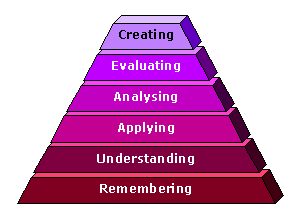
Remembering:
Understanding:
Applying:
Analysing:
Evaluating:
Creating:We created a 3 second long pixilation.

Reflection during lesson

How am I doing so far:
not doing very well we have not thought of a good idea.

Reflection at end of lesson:I enjoyed making a pixilation with Nicola it turned out better than expected. 


What have I achieved?
I have achieved making a 3 second pixilation with Nicola.


Pixilation is a stop motion animation based on people.


Monday, 23 November 2015

In todays class we where creating an animation out of magazine pictures and other pieces of paper. We are going to make them talk and move around when we make the animation next week.

This week we made a small animation out of magazine pieces from last week.

Monday, 16 November 2015